
"Force, precision and quality are indispensable for the operation of recycling plants"
Dipl.-Ing. Dirk Dietrich, Development Specialist at Pallmann Maschinenfabrik GmbH & Co. KG
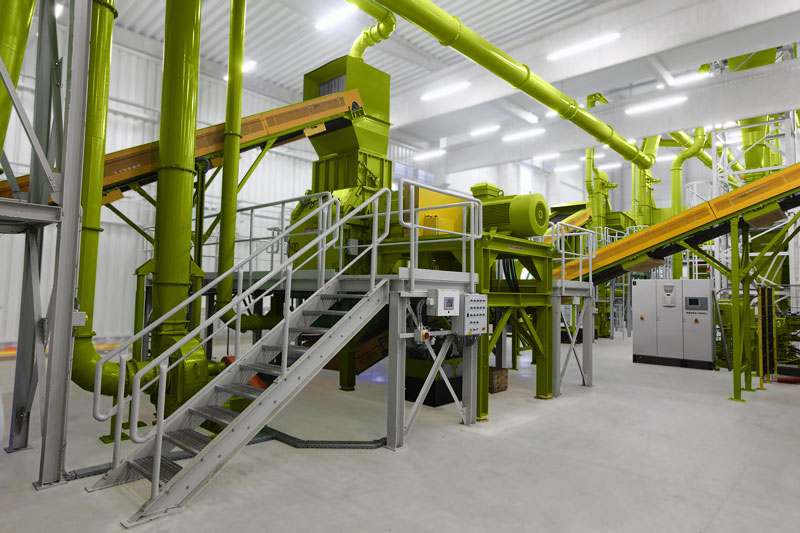
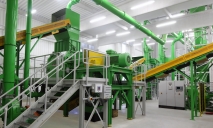
Image 1 Recycling plant with the single-shaft shredder Tiger.
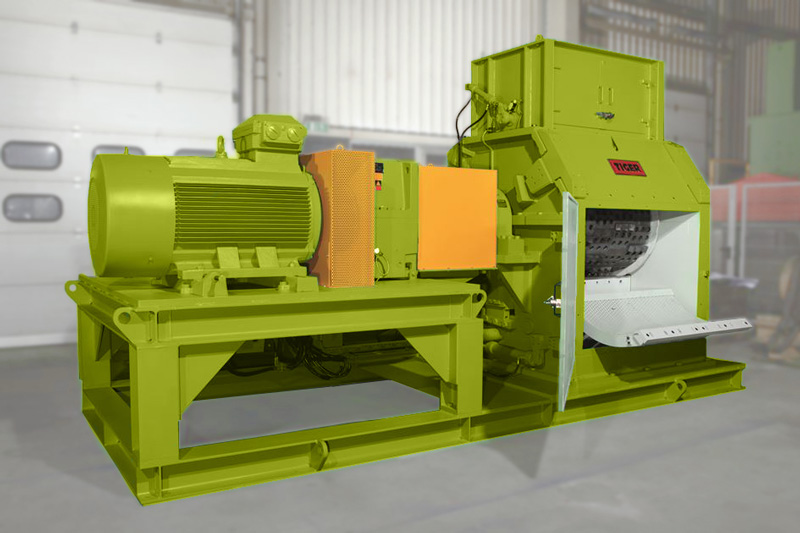
Image 2 A 355 kW motor drives the Tiger single-shaft shredder.
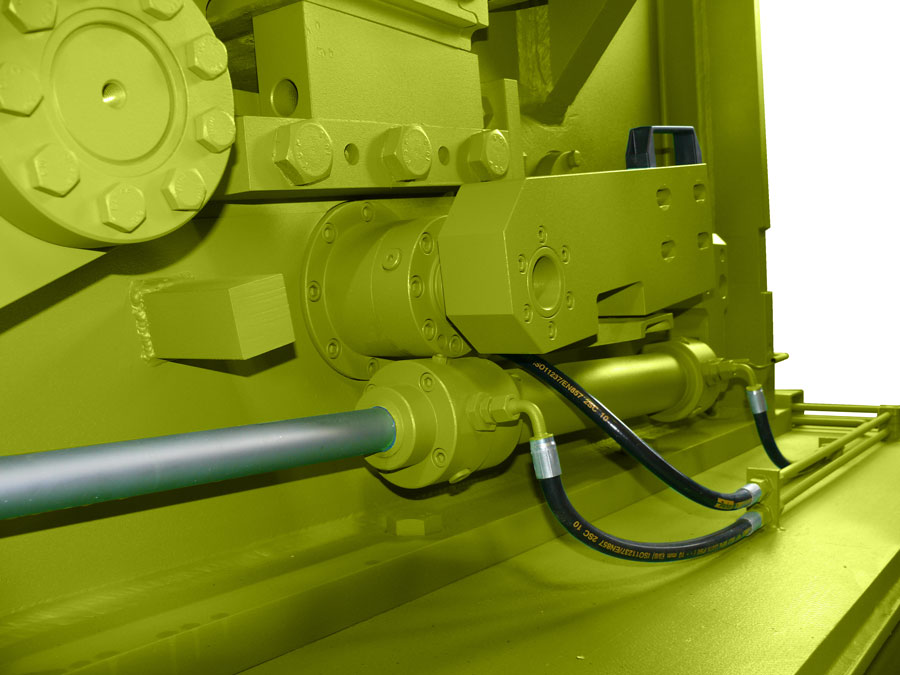
Image 3: This unprotected cylinder from Hänchen is designed for ten years of three-shift operation in a harsh environment, for example, in tire recycling.
Requirements for hydraulic cylinders
  • high manufacturing accuracy
  • long maintenance duration
  • Overall long service life

Resistant to:

  • dust and dirt
  • chemically aggressive substances
"Based on relevant experience with other suppliers, we have therefore opted for hydraulic cylinders from Hänchen for more demanding applications.
Dirk Dietrich, Development Specialist

Recycling places high demands
Long maintenance intervals for the hydraulic cylinders

Pallmann, with its more than 400 employees in Germany, builds its own range of different machine types for the recycling sector in a separate division. The processing of composite recyclables began ten years ago with a plant for car tyres. The individual machines as well as the entire plants were and are designed within the scope of special machine and plant construction for a wide variety of composite materials: wood composites - even if they are heavily contaminated - electronic scrap, floor coverings or conveyor belts can be separated. This also applies to tyres, which are returned to recycling as secondary raw materials as rubber, steel and textile with a degree of cleanliness of 98 %. Three to four work steps are typical for the Zweibrücken-based company:
  • the coarse shredding to a size of maximum 150 mm,
  • the separation of the composites,
  • the fine granulation and, if necessary, the finest granulation.
In any case, this is one less step than is common in the market.
 
The general conditions are - as is customary in the industry - extreme: large forces ultimately crush unpredictable material in an extremely rough environment. All components are exposed to loads from dirt, dust and also chemically aggressive substances. As flaps, screens, rotors and crushing units have to withstand great forces and are very heavy, hydraulics are indispensable. "Especially in the recycling sector, components must work according to the principle of 'install and forget'. This is because the end user of our plants may be working on another continent or often does not have a specialist who can professionally replace the seal on a hydraulic cylinder," emphasises Dietrich. "Based on relevant experience with other suppliers, we have therefore opted for hydraulic cylinders from Hänchen for more demanding applications. In a Spanish tyre recycling plant, for example, they have been working for ten years without maintenance or wear."
"In a Spanish tyre recycling plant, for example, Hänchen hydraulic cylinders have been working for ten years without maintenance or wear."
Dirk Dietrich, Pallmann Maschinenfabrik GmbH & Co. KG

Precision in a harsh environment
Hydraulic cylinders: low-friction, low-wear, durable
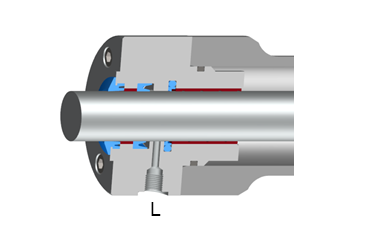
For the hydraulic specialists at Hänchen, precision is the key to such challenges. It is crucial that foreign matter, and especially the smallest foreign particles, do not enter the interior of the cylinder and cause long-term damage to the seals and piston rod. The seal combination makes a significant contribution to this. Therefore, optimised friction characteristics, low vibration and a minimal stick-slip effect are a matter of course, even in the basic design of Hänchen cylinders. These result, among other things, from a design feature that the hydraulics experts from Ostfildern have now extended to almost all catalogue cylinders: These are equipped with a sprayed and reworked synthetic guide. The sliding surfaces of these guides have a vibration-damping effect and prevent edge pressure. They also guarantee a certain capacity for absorbing side loads, which is very helpful in the harsh operating environment of recycling plants.
The unusually long service life is ensured by the high manufacturing precision as well as small guide clearances. In the seal combinations with the brand name Servocop®, which are used at Pallmann, an additional head-side sealing ring ensures virtually stick-slip-free movements. The absence of leakage with this very low-friction seal pair is made possible by an additional unpressurised leak oil port with a closing leak oil seal. In this way, very low friction and high tightness can be combined in this cost-effective quality solution. The fact that each cylinder consists of only three basic components and is manufactured as standard with a higher accuracy class than is customary in the market also contributes to its robustness. A thickly chrome-plated and honed piston rod surface guarantees optimum running properties with minimal wear. And the inseparable connection between piston and rod is particularly reliable and offers exceptional geometric accuracy. In addition, the internal honing of the tube ensures high stability and precision.
Stick-slip-free seal combinations

Cover type Servocop®  for hydraulic cylinders
enables low-wear use

With these properties, hydraulics from Hänchen are an ideal fit for Pallmann's profile: "Quality and cutting-edge technology are our top priorities, along with sustainability thanks to long service life and maximum plant availability, even in three-shift operation, as well as easy spare parts replacement with long maintenance intervals," is how the development specialist describes his concept.
 
This also applies to the 'Tiger' single-shaft shredder, which separates the composite materials in the shredding process. This is a customer-specific machine that is adapted as part of special machine construction: depending on the task, it integrates upstream shredding tools, different rollers and self-sharpening cutting blades that require very little maintenance and are hardened in a specially developed process - these are a Pallmann patent. The Tiger is designed for a long service life, a benchmark that the components must also meet. Wear parts are therefore only shredding elements such as blades - or, in other machines, beaters, friction parts and impact elements. The maintenance interval in continuous operation is far longer than the four weeks customary in the market. Even if this concept is initially associated with higher acquisition costs, in Zweibrücken they are convinced of its economic viability. Because what counts in the long run are the process costs per tonne in decades of continuous use. This also includes the specifically minimised energy requirements.

Hänchen hydraulic cylinders in use
under high static forces and vibrations

The machines shred up to 4 tonnes of all materials that can be cut into grain sizes of maximum 20 mm every hour. Solid, wave-shaped rotor ripping bars move - driven by a 355 kW motor - past stator ripping bars. By reversing regularly, i.e. changing the direction of the rotor, they sharpen themselves automatically. Here, a first Hänchen cylinder is in use, in the middle of the inlet flap area. A generously dimensioned screen is installed in the lower housing of the machine. This holds the material in the working area until it can be discharged through the screen perforation. Two further cylinders move heavy screens, which are folded out if required or when the blades are changed. These hydraulic cylinders are also constantly exposed to environmental influences from dirt and vibration. A further hydraulic cylinder pushes the blade bar outwards for maintenance purposes: it is installed with a stroke of 1700 mm, a rod diameter of 50 mm and a bore of 80 mm. In normal operation, the piston rod is constantly extended and the shredded recyclable material constantly falls over the cylinder. This results in high static forces and vibrations, which place a particular load on the seal combination. Apart from a special paint finish and a special position of the bushes, this component is also a catalogue product at Hänchen, which has a very positive effect on the price and reliability. The last cylinder moves a hydraulic motor to rotate the rotor for maintenance purposes. As with all other comparable plants, the hydraulic system, including the power unit and generously dimensioned accumulator, is supplied by Pallmann for the Tiger.

The specialist for material shredding up to a hardness of 4 can - as now in recycling technology - work together with customers to investigate shredding processes, test the behaviour of new materials or innovative processes or develop new machines, plants or other shredding solutions. In addition to the extensive know-how in application-typical mechanics, hydraulics, electrics, materials science, electronics, process optimisation, control software and sequence programming, a special plus is also available: its own technical centre with 150 different machines. Here, tests can be carried out and prototypes can be tested. This enables Pallmann to achieve a reliability and performance that is unparalleled on the market. This is demonstrated by tyre recycling, where the Tiger with the Hänchen cylinders is also used:

"Ten years of three-shift operation without any problems show that our concept works," reports Dirk Dietrich proudly. The hydraulic components from Hänchen are an essential quality component.

Jörg Beyer, mediaword
© Hänchen 2014

Read more in the articles published on the application
Force and precision - hydraulic cylinders are a quality component in recycling plants
Hydraulic cylinders fulfil these requirements in recycling plants. They help to break up stable material composites and withstand extreme mechanical loads. In addition, a precise ... is required for the most precise possible separation of the various recycling end products
more on this in Der Konstrukteur

November
2016
Menu
DE