
Cushioning
Design of Hydraulic Cylinders
Hydraulic cylinders extend their cylinder stroke over the entire length, unless it is externally limited. At the end of the stroke, the piston rod then strikes the internal end stop.
At higher speeds in conjunction with large moving masses, large amounts of energy can be released upon impact in the end position, which under certain circumstances can destroy the cylinder. Here, the use of a cylinder with cushioning may be necessary.
The decision as to whether cushioning is necessary is made on the basis of the kinetic energy of the system, i.e. depending on the moving mass and the speed.
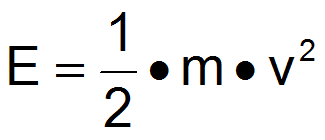
In the end position, this kinetic energy is converted via a deceleration path ΔL into a force Fa.
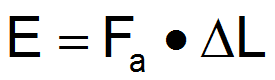
In cylinders without cushioning, this force Fa generates a mechanical elongation ΔL of the cylinder components, in particular the piston rod, the cylinder tube and the mounting bolts.
In cylinders with cushioning, this force Fa is generated as a damping force over the cushioning path ΔL.